Influencer Media Kits: What Brands Really Look For (2026)
Influencer media kits are a different game: brands evaluate different data than event organizers. The 8 elements that really convince in brand pitches — with examples and best practices.
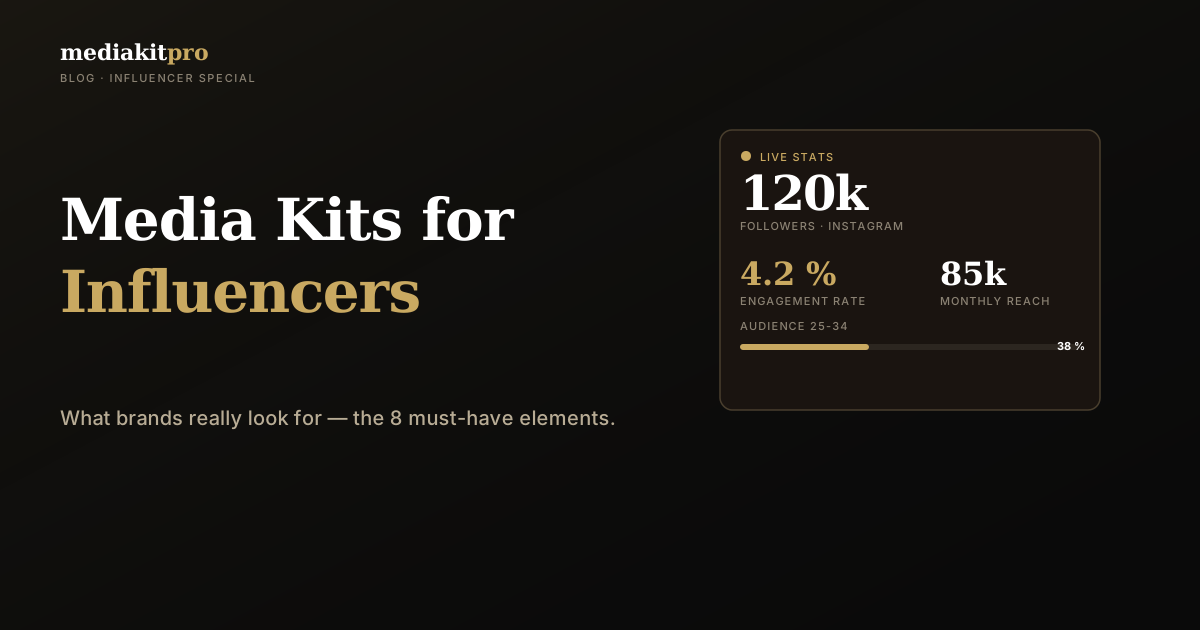
If you work as an influencer collaborating with brands, your media kit is the most important sales asset you have. Brand managers and media agencies decide in under 60 seconds whether to put you in their pitch deck — or click on to your competition.
This article shows you the 8 elements that really convince in an influencer media kit. Based on analysis of media kit briefings from US and UK brand managers (Beauty, Lifestyle, Tech, B2B SaaS) plus best practices from top-performer profiles in both markets.
Why influencer media kits look different from speaker media kits
Speaker and coach media kits sell expertise and trust. Influencer media kits sell reach and audience match. That completely changes what's relevant:
| Element | Speaker media kit | Influencer media kit |
|---|---|---|
| Bio | Professional vita, awards | Personality, content style |
| Topics | Speaking topics | Content pillars |
| Press quotes | Media quotes | Brand testimonials |
| References | Past talks | Past brand collabs |
| Pricing | Fee range | CPM, package prices |
| Audience | Industry focus | Demographics, geo, interests |
The most important distinction: brand managers want data on the audience. Event organizers want trust in the speaker.
The 8 must-have elements of an influencer media kit
1. Hero with personality photo, not conference photo
Influencers live on personal identification. Your hero photo must show who you are — lifestyle, brand look, authenticity.
What works:
- Lifestyle shoot with your brand look
- Action shot fitting your content (Travel, Food, Fitness, Beauty)
- Editorial style with clear mood
What doesn't:
- Stiff headshot like for job applications
- Conference photo from a stage appearance
- Black-white portrait without brand reference
2. Live statistics (not screenshots from 2023)
Brand managers distrust static numbers. If your media kit says "120k followers on Instagram (status March 2024)," the buyer thinks: "Probably dropped since then, otherwise it'd be current."
What goes in:
- Current follower numbers (ideally pulled via API, not hand-maintained)
- Engagement rate of last 30 days
- Reach (impressions, reach) of last 30/90 days
- Story views, sticker clicks (Instagram), watch time (YouTube/TikTok)
At mediakitpro live stats are pulled from platform APIs — you don't manually maintain anything.
3. Audience insights with demographics
The most important data point for brands. What goes in:
- Geo distribution: % US, UK, EU, other
- Age: distribution in 5-year buckets (e.g., "18–24: 12 %, 25–34: 38 %, 35–44: 31 %, 45–54: 15 %, 55+: 4 %")
- Gender distribution: % female / male / non-binary
- Languages: English / Spanish / others
- Interest clusters: Top 5–7 interest tags
Brand managers filter influencer lists by these data. If yours are missing, you're cut.
4. Content pillars (not "speaking topics")
Which theme areas do you serve regularly?
Example lifestyle influencer:
- Sustainable Fashion (40 % of posts)
- NYC City Guide (25 % of posts)
- Workouts & Wellness (20 %)
- Behind-the-scenes business (15 %)
Brand managers see immediately: does my brand fit the content mix? If you pitch as "Lifestyle" influencer but 80 % of your posts are fitness, the lifestyle brand feels wrong.
5. Past brand collaborations
Real names + visual references. Brand managers trust peers. If you've worked with Aesop, Lululemon, and Glossier already, that signals tier.
What goes in:
- Brand logo
- Format of collab (Post / Story / Reel / Long-term)
- Optional: brief outcome statement ("400k impressions in 7 days")
- Optional: link to public example post
5–8 strong brand collabs beat 15 mediocre.
6. Package prices (CPM or flat)
Pricing transparency is more important in the influencer market than for speakers because brand managers compare hundreds of options.
Format options:
Flat packages:
- 1× Instagram Post (static + Story share) — $1,500–4,000
- 1× Reel (with Story promotion) — $2,500–6,000
- Long-term Brand Ambassador (3–6 months) — Custom
CPM model (for larger accounts):
- $ per 1,000 impressions, with minimum buy
- Example: $10/CPM × 100,000 impressions = $1,000
Which model fits depends on size and platform. More on general pricing strategies: Speaker Fees 2026 (logic translates to influencer market).
7. Case studies with conversion data
If you have hard conversion data (sales, sign-ups, code redeems), show them. That's the hardest selling proof.
Example:
"Collab with Aesop: 1× Reel + 3× Stories. Impressions: 380k. Code redeems in Aesop online shop in 14 days: 412. At AOV of $87 → gross sales $35,844. Influencer investment: $4,500. ROAS: 7.9×."
If you can deliver such numbers, you're in the top 10 % of all influencers because 90 % only report "reach" without conversion.
8. Inquiry form for brand briefings
Brand managers want to brief quickly. If your media kit has only an email address, they often don't write directly — they save you to a "later" list.
What goes in:
- Name, brand, email, briefing
- Required fields: format wish (Post/Reel/Story), timing, budget range
- GDPR consent
- Auto-reply with next steps
At mediakitpro Premium plan, brand inquiries land in a dashboard inbox with status tracking — no more forgotten inquiries.
What brand managers really evaluate
From briefings of US/UK media agencies, in this order:
- Audience match: Do demographics fit the brand audience?
- Engagement rate: Real interaction or bought reach?
- Content style: Visually fits the brand world?
- Past brand collabs: Credible in brand context?
- Pricing: Within budget?
- Response speed: Replies fast, professionally?
Points 1–3 decide if you make the shortlist. Points 4–6 decide who from the shortlist gets booked.
Common influencer media kit mistakes
Three mistakes we see particularly often — that directly cost brand deals:
Mistake 1: Static stats from 2 years ago
Already mentioned — the killer #1. Live stats solve the problem completely.
Mistake 2: "I'm available for partnerships!" as CTA
Casual style that feels unprofessional in B2B brand contexts. Instead: concrete inquiry form with briefing fields.
Mistake 3: No audience demographics
80 % of all influencer media kits show followers and engagement, but no demographics. That makes it unnecessarily hard for brand managers — and you lose inquiries that go to someone with a better media kit.
More typical media kit mistakes in the mistake article.
Which platform data to integrate
Per platform, the most important data points:
| Platform | Required data | Optional |
|---|---|---|
| Followers, engagement rate, story views | Sticker clicks, saves | |
| TikTok | Followers, average views, engagement rate | Watch time, completion rate |
| YouTube | Subscribers, average views, watch time | CTR, avg session |
| Connections, post impressions, engagement | Newsletter subs, article reads | |
| Newsletter | Subscribers, open rate, click rate | Top-performer subjects |
If you're active on 4+ platforms, you don't need equally deep data for each — focus on 1–2 main channels plus brief overview of others.
How to build your influencer media kit
Three paths:
1. DIY in Canva
Pretty look, but static data and no inquiry form. Update load high. Detailed guide with weakness analysis: here.
2. Hire designer
Custom design, but again static and expensive in updates. Detailed comparison: cost article.
3. SaaS tool like mediakitpro
Live stats via API, integrated inquiry form, all 8 must-have elements pre-built. Setup in 30 min (guide).
Conclusion
An influencer media kit that really produces brand deals has all 8 elements — not 4. Most common gap: audience demographics (missing in 80 %) and live stats (missing in 70 %). If you only close these two gaps, you're structurally in the top 20 % of the market.
Concrete next steps:
- Pull audience demographics from platform insights and place them prominently
- Embed live stats via API (or at least manually update every 30 days)
- Build an inquiry form for brand briefings
If you want to build your influencer media kit with all 8 elements: mediakitpro free plan. Want to see examples of good structures first: 10 annotated examples incl. influencers. What generally belongs in your media kit: content checklist with all sections.
On this page (21)
- Why influencer media kits look different from speaker media kits
- The 8 must-have elements of an influencer media kit
- 1. Hero with personality photo, not conference photo
- 2. Live statistics (not screenshots from 2023)
- 3. Audience insights with demographics
- 4. Content pillars (not "speaking topics")
- 5. Past brand collaborations
- 6. Package prices (CPM or flat)
- 7. Case studies with conversion data
- 8. Inquiry form for brand briefings
- What brand managers **really** evaluate
- Common influencer media kit mistakes
- Mistake 1: Static stats from 2 years ago
- Mistake 2: "I'm available for partnerships!" as CTA
- Mistake 3: No audience demographics
- Which platform data to integrate
- How to build your influencer media kit
- 1. DIY in Canva
- 2. Hire designer
- 3. SaaS tool like mediakitpro
- Conclusion
Visibility tips, delivered to your inbox
One actionable tip every 2 weeks for speakers, coaches and consultants. Unsubscribe anytime.
You might also like
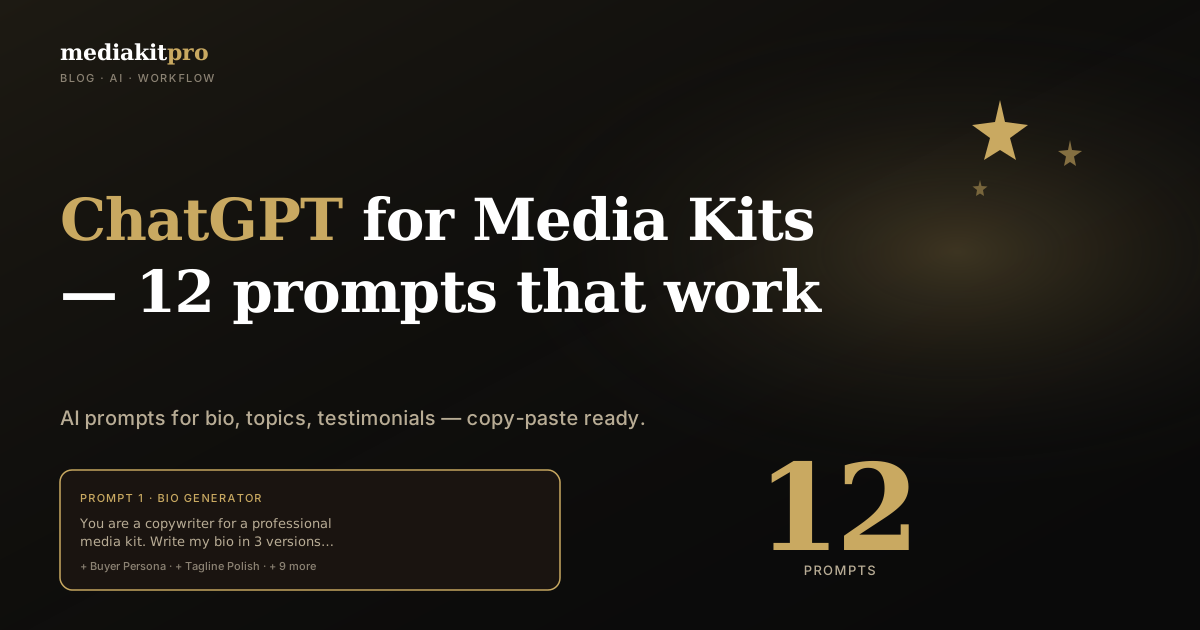
ChatGPT for Media Kits — 12 Prompts That Actually Work
AI is the best tool right now for media kit content. 12 ready-to-use ChatGPT prompts to copy — for bio, speaking topics, testimonial polishing, and more. Plus the most common pitfalls.
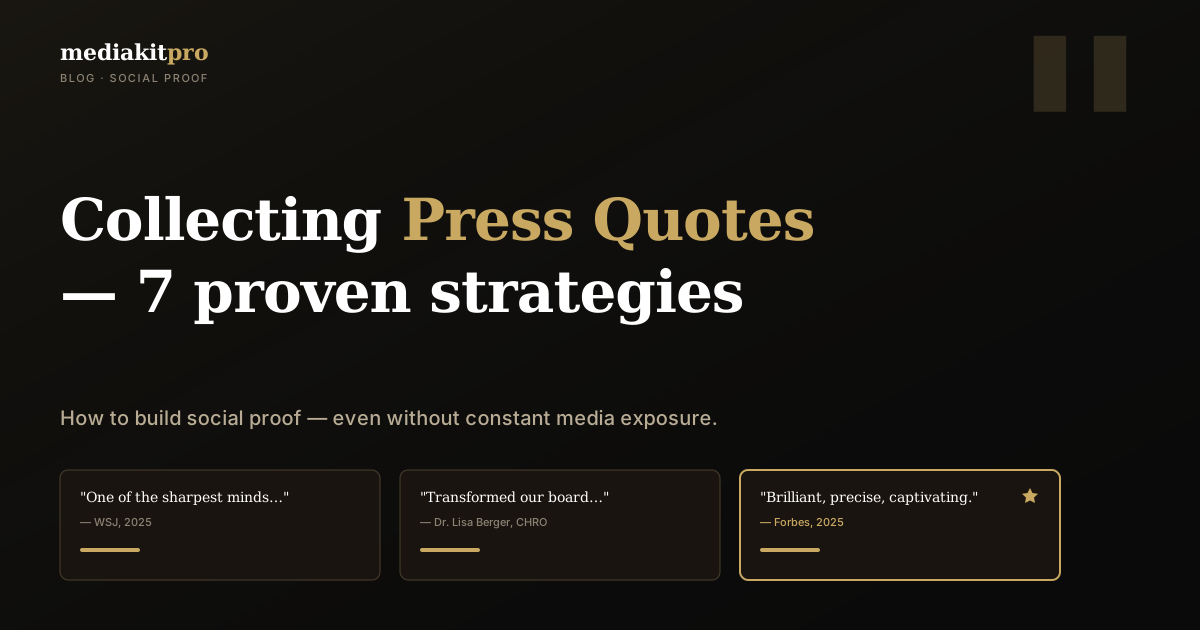
Collecting Press Quotes & Testimonials — 7 Proven Strategies
A media kit without testimonials doesn't sell. But how do you get good quotes if you're not constantly in the media? 7 proven approaches — from elegant client outreach to conference feedback mining.
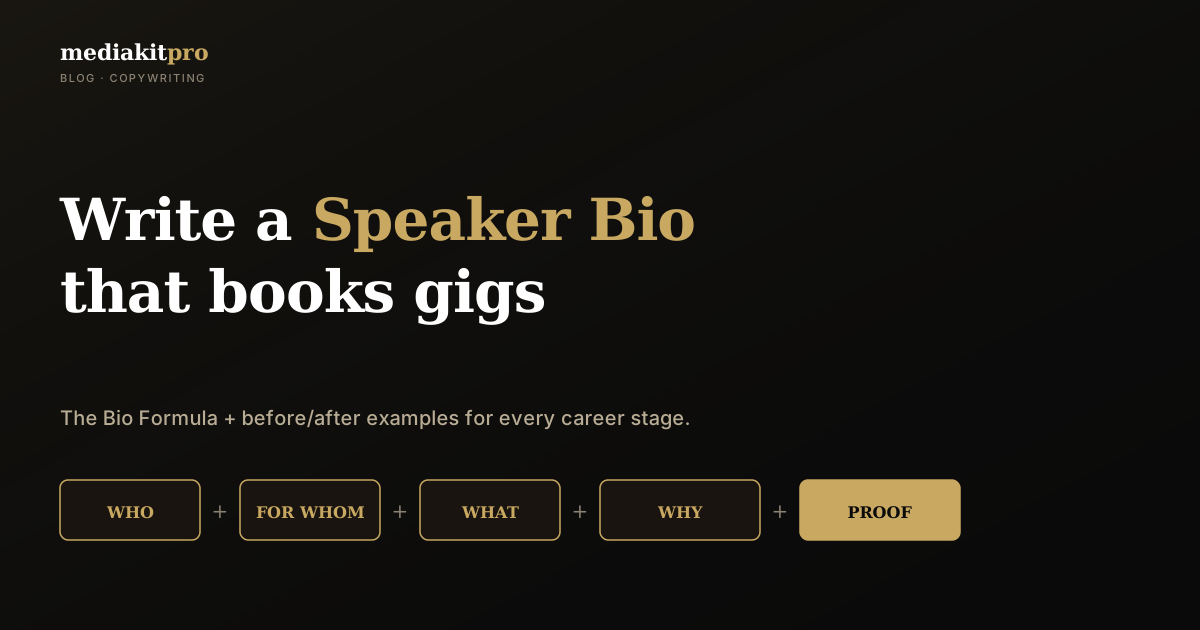
How to Write a Speaker Bio That Books Gigs (Templates Inside)
A strong speaker bio is the most important text in your media kit — and the one most people fumble. Here's the Bio Formula with before/after examples for every career stage.